

Why Your Succulents Look Dead Right Now (And Why You Should Leave Them Alone)

Tree Aeonium doesn’t look like much in its summer dormancy
The lush, green of spring has officially left the building. In its place? Some of our absolute favorite succulents are starting to look, well… kind of haggard.
If you have Aeoniums (those gorgeous, rosette-forming beauties) sitting out in the full afternoon sun, you might be looking at them with a sense of creeping dread. Right now, many of them have probably dropped almost all their lower leaves, leaving nothing but long, bare, woody stems with a small, fist of red or purplish leaves clinging to the very tip.

Aeonium aroborium in its summer dormancy stage
Your first instinct might be to panic, grab the garden hose, and drown them in water to “save” them.
My advice? Drop the hose and step away from the plant. Let’s talk about why your succulents are actually acting brilliant right now.
The Summer Nap: Understanding Succulent Dormancy
Here’s the secret that big-box nurseries don’t always print on the plastic plant tags: many succulents don’t grow year-round. In fact, a huge portion of them do the exact opposite of what traditional garden plants do. They go completely dormant in the dead of summer.
Aeoniums, Dudleya (our beautiful California natives), Senecio (like Blue Chalksticks), and Cotyledon evolved in dry, quasi-desert climates with hot, bone-dry summers and cool, wet winters. When the temperature spikes in July, these plants hit the pause button.
To protect themselves from drying out, they pull off a pretty incredible survival trick:
- They drop their lower leaves to reduce the surface area that loses water to evaporation.
- They curl their remaining leaves inward into tight, dense cups to shield their growing core from the intense sun.
- They slow their metabolism to a near-complete halt.
Those long, bare stems with the tiny red fists at the end? That isn’t a dying plant. That’s a healthy, highly adapted plant going into power-saver mode. The red color is actually a natural “sunscreen” (anthocyanin) the plant produces to protect itself from UV rays.
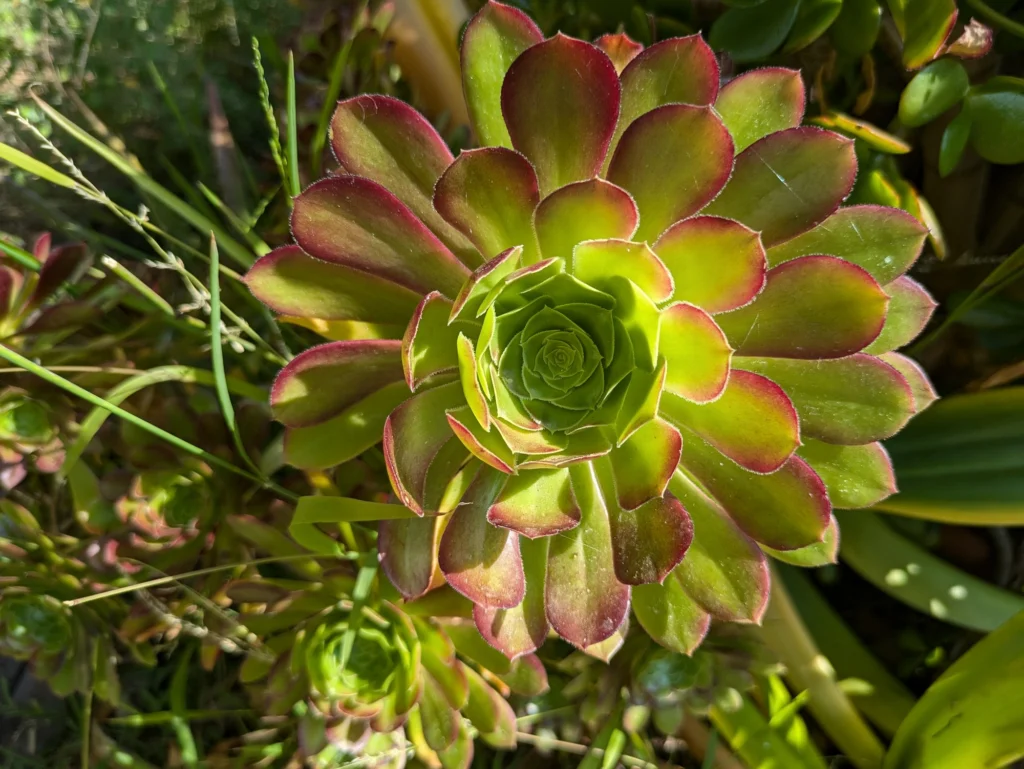
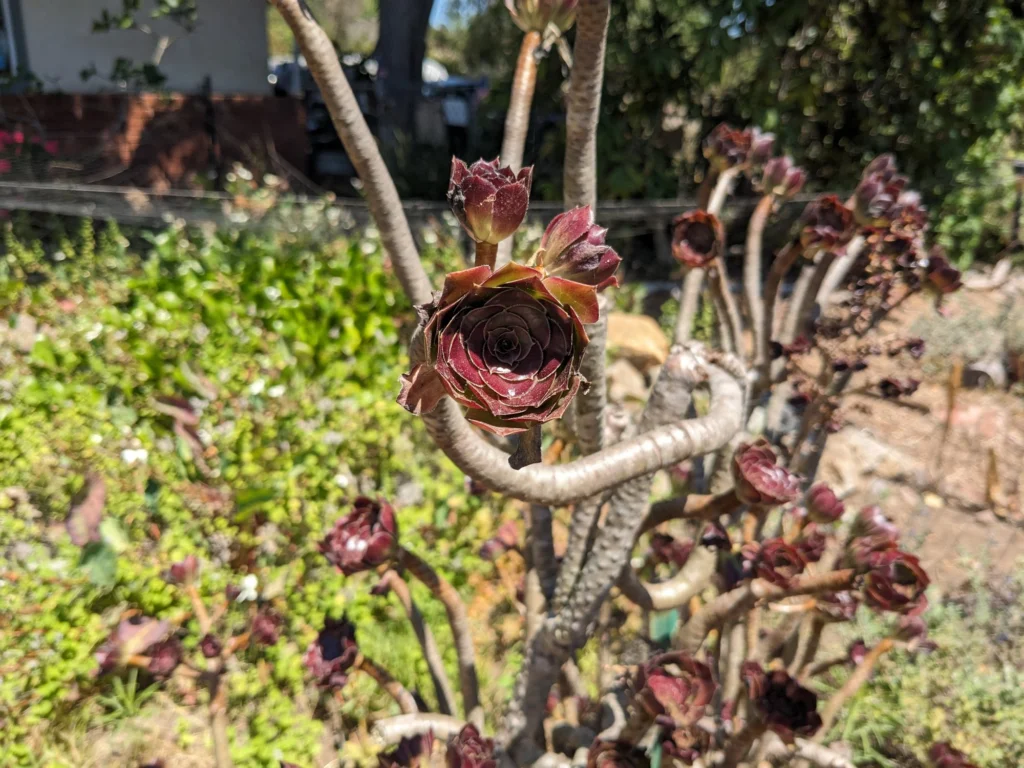
Aeonium in winter (L) versus summer (R)
The Golden Rule: Don’t Feed the Sleepers
Watering a dormant succulent is the gardening equivalent of dumping a bucket of ice water on someone while they are fast asleep. It doesn’t help them; it just shocks the system.
Because the plant’s roots have essentially gone to sleep for the season, they aren’t drinking. If you dump water into the soil right now, that moisture just sits there. Combined with hot summer soil, it’s the perfect breeding ground for fungal pathogens. You will literally cook and rot the roots.
The Summer Rule of Thumb: From July through September, let your Aeoniums and winter-growing succulents rest. Give them a splash of water maybe once every few weeks just to keep the soil from turning into literal concrete, but otherwise, leave them alone. They’ll wake up, open up, and explode with fresh green growth the second the weather cools down and the rains arrive in late autumn.
When It’s Actual Damage: Sunburn vs. Heat Stress
Now, there is a difference between a plant that is happily sleeping and one that is actively getting baked. Here is how to read your succulent’s body language right now:
Heat Stress (Totally Fine)

A jade plant changes leaf color to protect from the summer sun
- What it looks like: Deepening colors. Green echeverias turning bright pink on the edges; aeoniums turning dark burgundy or red; jade plants getting orange-red tips.
- The Verdict: This is normal and highly desirable! Stress colors are what make succulents so beautiful.
Actual Sunburn (Not Fine)

Sunburn on a jade plant with shriveling and black spots
- What it looks like: Permanent, beige, white, or black spots and scars across the leaves that face the afternoon sun. The tissue looks shriveled, papery, and dead.
- The Verdict: The sun is simply too intense for that specific spot.
The Quick Fix
If a succulent is getting genuinely sunburned, toss some shade cloth over it. If it’s in a pot, move it into the afternoon shadow of something else like a larger, heat-tolerant shrub. Don’t bother cutting off the sunburned leaves right now—they are acting as a shield for the leaves underneath. You can tidy them up in October.
The “Lemonading” Project: What to Do with Leggy Stems
If you absolutely can’t stand the look of those long, bare, woody stems, you don’t have to just live with them. You can use this time to plan a classic “garden lemonading” (as in “when life gives you lemons…”) project for when they wake up, or do a clean-up right now.

It’s easy to grow new plants from succulent cuttings
If you have a succulent that stretched out too much earlier in the spring and now just looks gangly, you can prune it and grow new ones:
- Clip a Bit: Use a clean, sharp pair of pruners to snip the rosette off, leaving a few inches of stem attached to the head.
- Let it Dry: Set that cutting aside in a dry, shady spot in your garage or porch. Leave it alone for a week or so. The cut end will dry out and grow a calloused “scab.” (If you stick a fresh, wet cut straight into soil, it will rot).
- Replant: Once calloused, tuck the stem into a pot of dry, sandy succulent soil. Don’t water it until you see new roots start to form in a few weeks.
- The Bonus: Leave the old, bare stem in the ground! More often than not, that “dead-looking” stick will start pushing out dozens of tiny, baby succulent “pups” along the sides by the time autumn hits.
The Takeaway: Live and Learn
Just about every expert gardener in the Southwest has accidentally killed a succulent by trying to “nurse it back to health” with a hose in July. If you’ve done that, don’t feel bad. It’s a rite of passage.
So, take a look at your yard this week with fresh eyes. Celebrate the weird, tight, woody little survivors. Wipe the dust off your sunglasses, pour yourself a cold drink, and give yourself (and your garden) permission to just chill out until fall.
About the Author: Sage Osterfeld


