

The Great August Pause: How I Processed 10 Gallons of Sauce & Prepped for Fall Tomatoes

90 jars of fresh-packed tomato sauce sitting on the shelf in our garage
It’s enough to carry our family’s pasta, pizza, and chili habit clear through the winter and straight into next May.
If you had looked at our garden plot this time last year, though, you wouldn’t have bet on us hitting that milestone. Last season was a masterclass in frustration: I planted too many finicky, ultra-fancy heirloom varieties that yielded very little fruit, and the local gopher population essentially treated our raised beds like an all-you-can-eat buffet. I lost nearly a dozen plants before August even got here.
This year, I regrouped, simplified, and went back to basics. And while our garden beds are looking a little tired under the relentless August sun right now, the harvest proved that a few strategic adjustments can change everything.
The Variety Game: Balance Yield with Purpose
The single biggest shift I made this season was choosing varieties based on job descriptions rather than colorful seed catalog descriptions. I planted seven varieties in total, carefully splitting the team between determinates (bush types) and indeterminates (vining types).
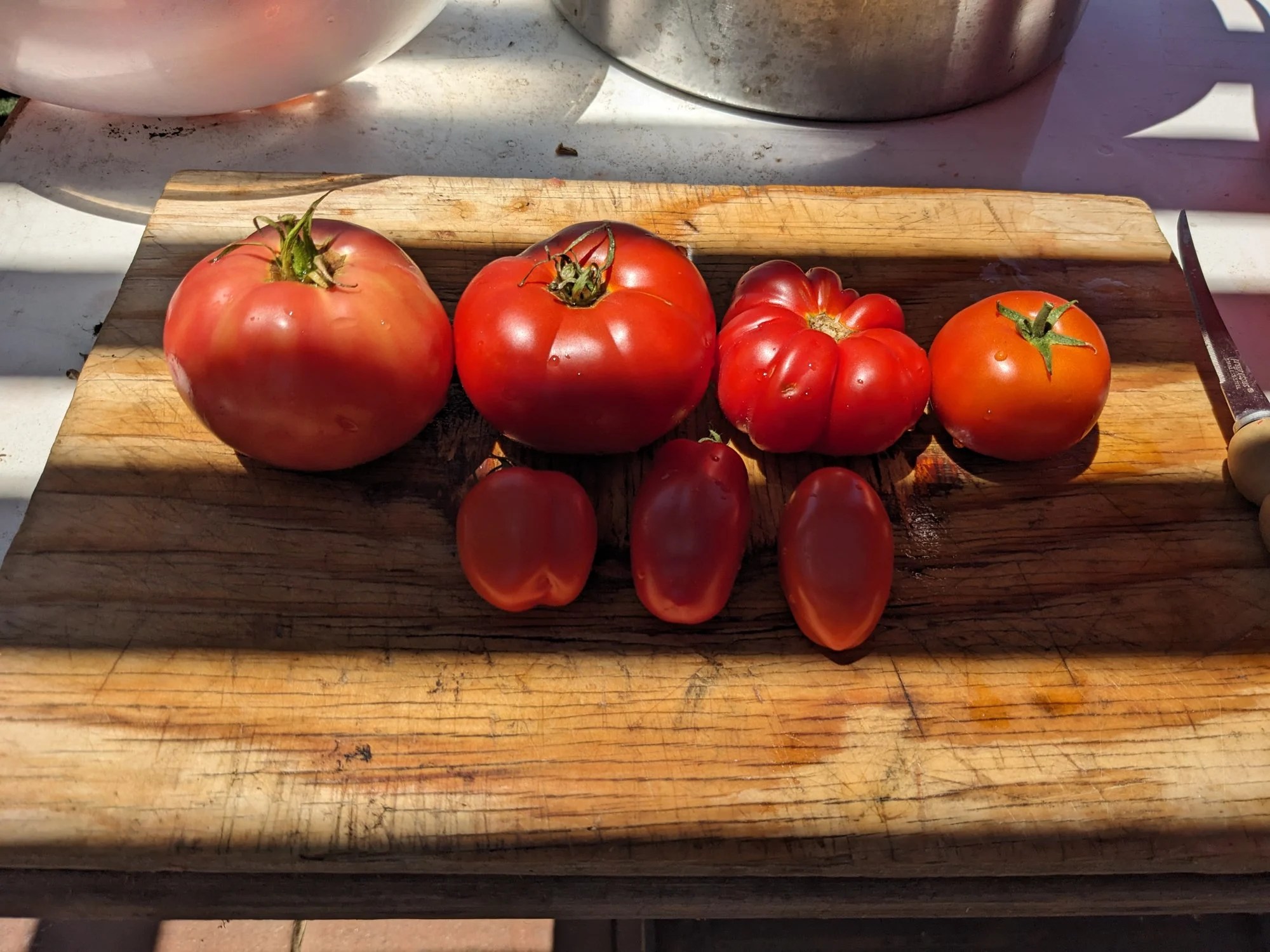
This year’s tomatoes. Back row (L-R): Steak Sandwich, Big Beef, Costaluto, Celebrity, Front Row: Big Mama, San Marzano, Roma
| VARIETY | TYPE | PRIMARY USE |
|---|---|---|
| Roma | Determinate | Bulk Canning & Paste |
| Celebrity | Determinate | Bulk Canning & Slicing |
| Big Beef Beefsteak | Indeterminate | Fresh Eating / Canning |
| Steak Sandwich | Indeterminate | Fresh Eating / Canning |
| Costaluto | Indeterminate | Fresh Eating / Saucing |
| San Marzano | Indeterminate | Paste & Sauce |
| Big Mama (F4) | Indeterminate | Thick Sauce & Slicing |
- The Heavy Lifters (Determinates): Roma and Celebrity did exactly what determinates are designed to do. They grew to a set size, set their fruit in one huge, concentrated wave, and offered up pounds of low-moisture meat all at once. This concentrated harvest made bulk canning actual processing sessions rather than a dragged-out, daily chore.
- The Long-Distance Runners (Indeterminates): For fresh eating—and to keep a steady supply trickle for the sauce pot—I ran Beefsteak, Steak Sandwich, Costaluto, and classic San Marzano.
- The F4 Accidental Hero: Four years ago, I saved seeds from a standard “Big Mama” variety. Plant breeding in a home garden is always a gamble, and by this fourth generation (F4), they are no longer “big.” Instead, they’ve stabilized into a tough, incredibly productive, meaty oxheart variety (read more about the experiment here). They aren’t pretty, but their low water content makes them an absolute dream for thick sauce.
The Outdoor Turkey Fryer Setup
If you’ve ever tried boiling 30 pounds of tomatoes inside a kitchen during an August heatwave in Southern California, you know it turns your living space into a sauna. To keep the house cool (and keep my marriage intact) I moved the entire processing operation outside to the patio.

My 6 gallon turkey fryer setup
My setup relies on a simple 6-gallon propane outdoor turkey fryer rig:
1.Blanch & Peel Outdoors
Use the high-BTU burner outside.

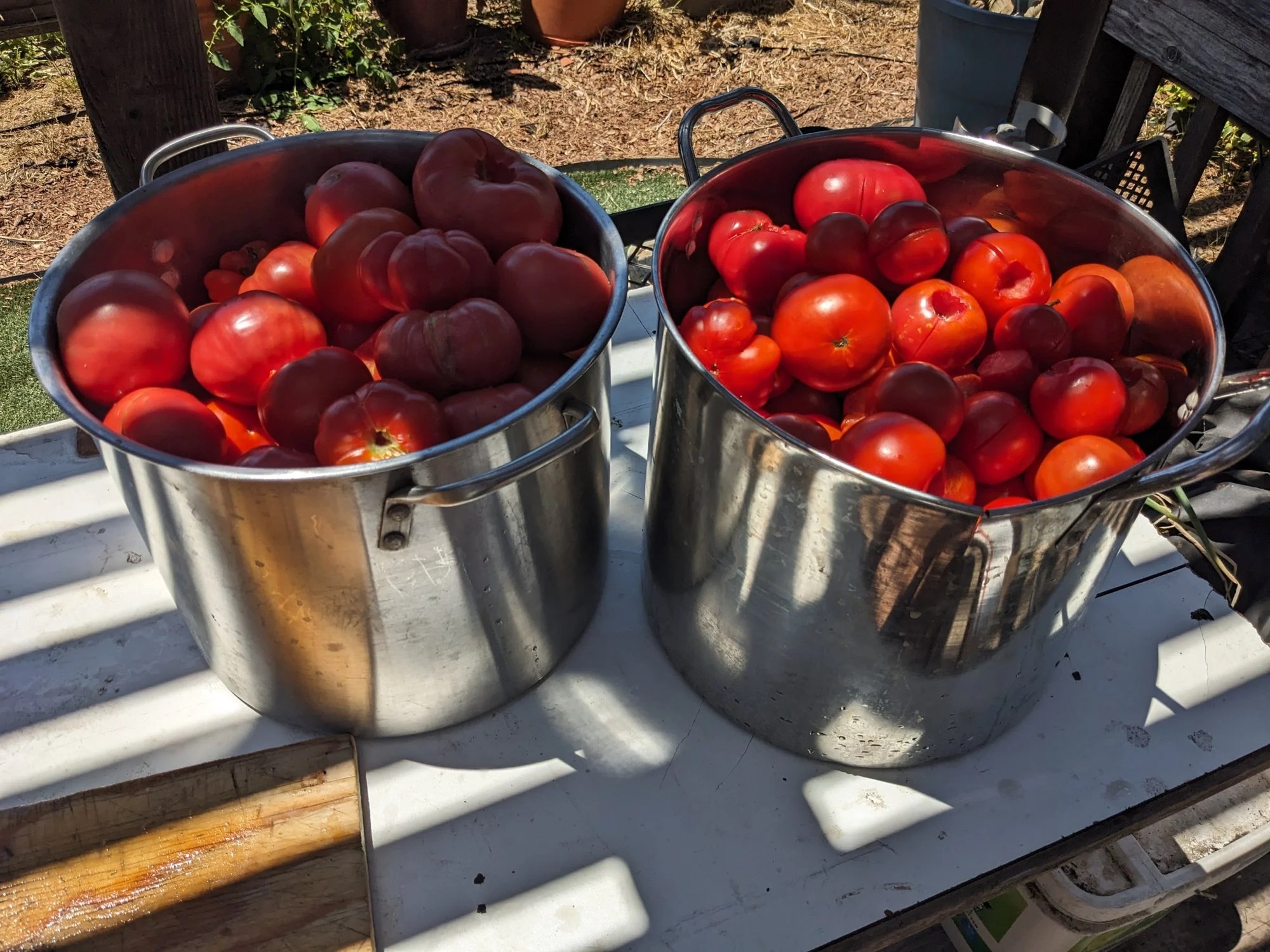
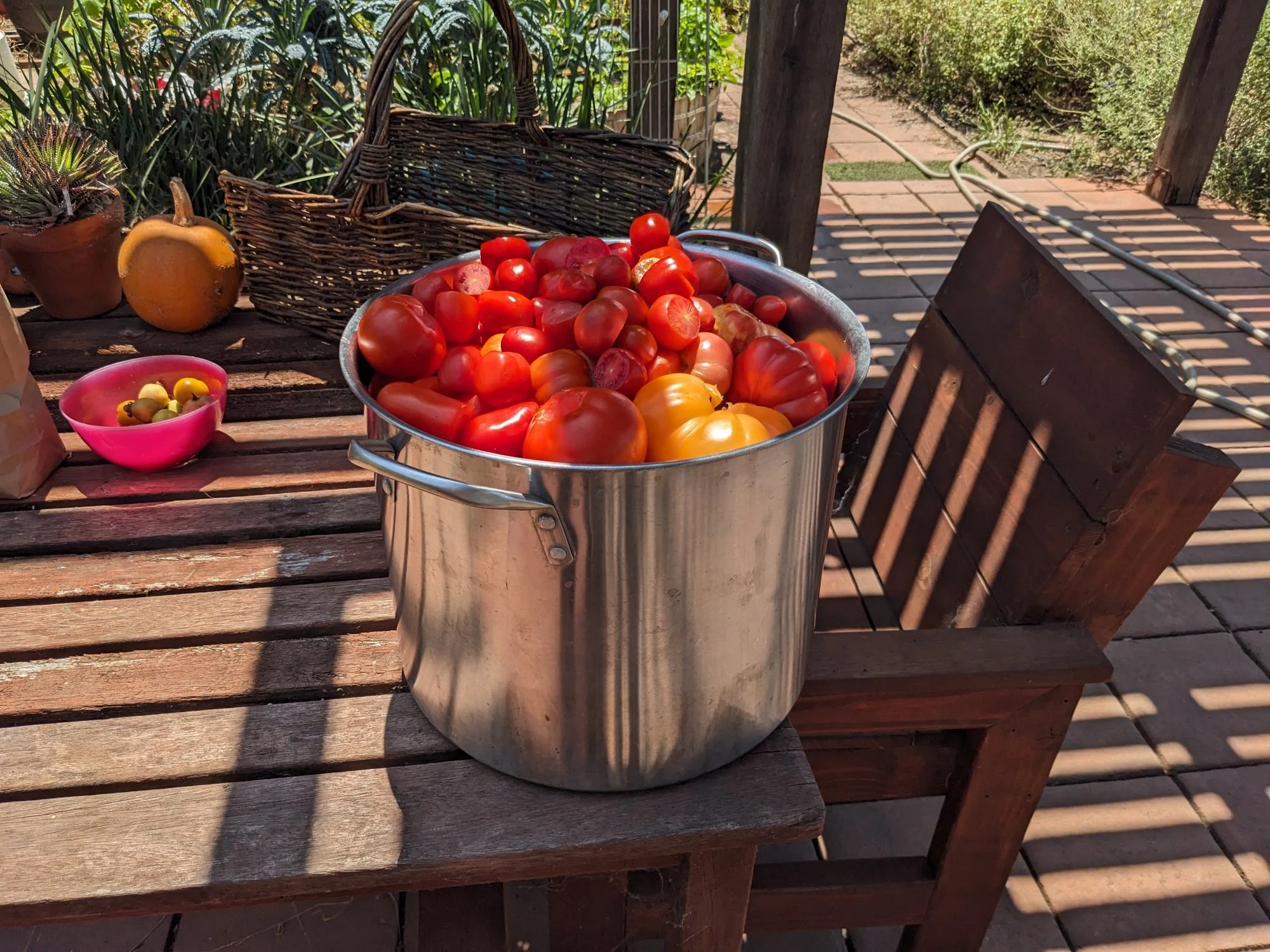
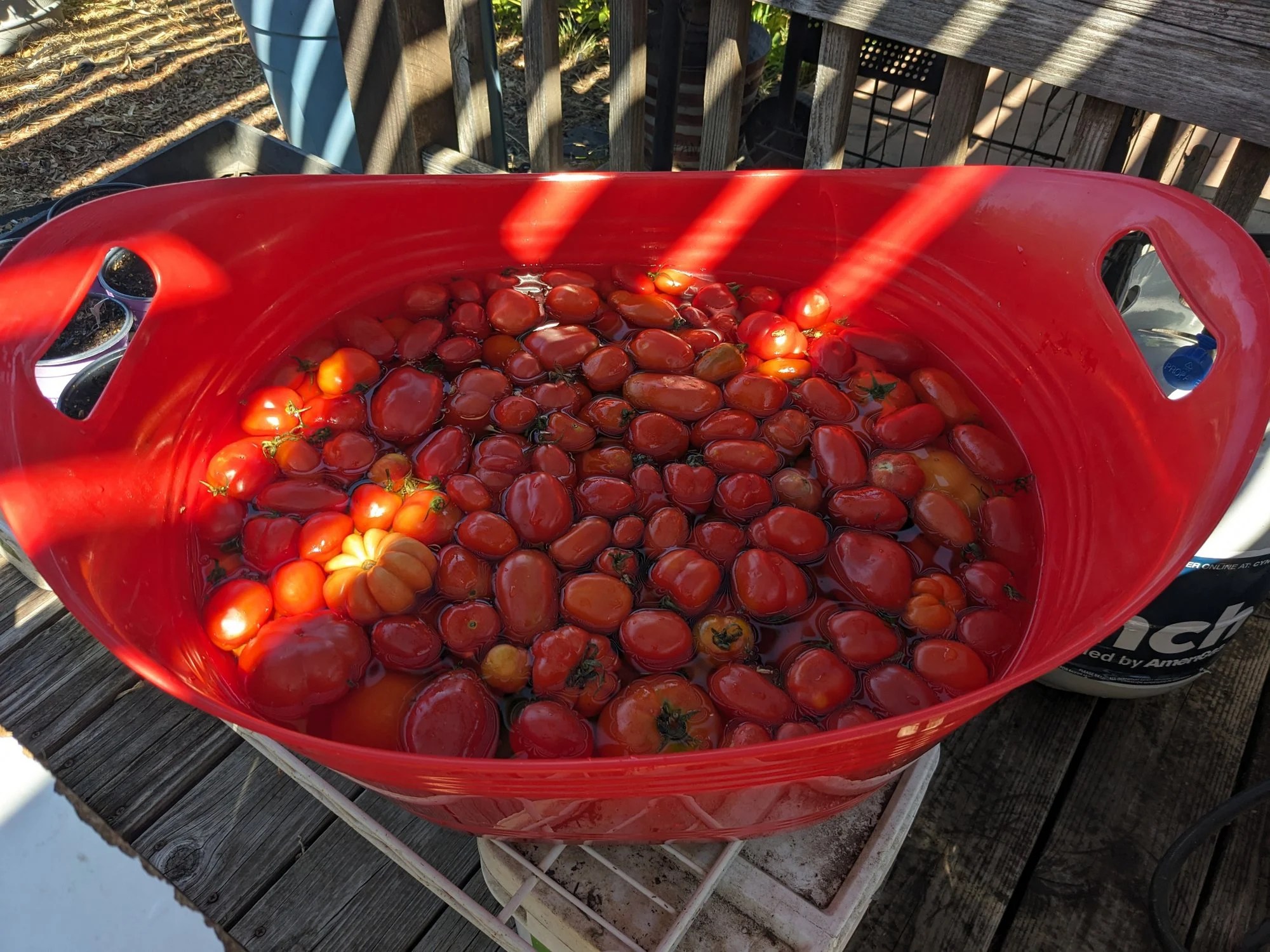
Fill the 6-gallon pot with water and bring it to a rolling boil over the propane burner. Drop the tomatoes in for 60–90 seconds until the skins crack, then plunge them into an ice bath. The skins slip off without steaming up your kitchen.
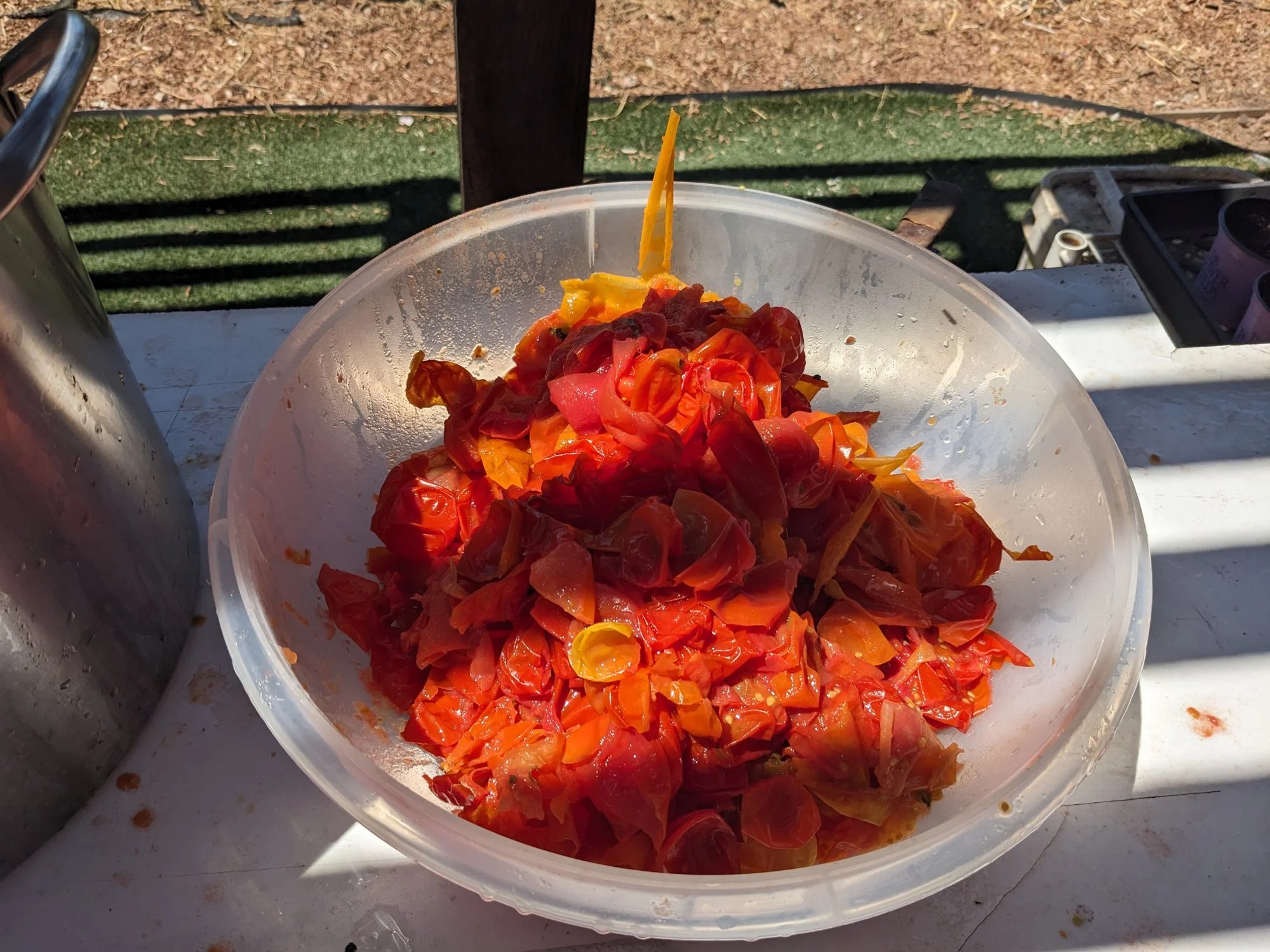
Tomato skins: It’s what’s for dinner (if you’re a chicken or duck)
Pro-tip: Don’t throw those tomato skins away! They make great compost. Or, if you’re like me and have backyard poultry, they make a gourmet meal for your chickens and ducks.
2.The Low-and-Slow Reduction
Transfer to a 2-gallon pot on low heat.


While many recipes call for immediately pureeing tomatoes or running them through a high-speed mill, I transfer our peeled tomatoes into a secondary 2-gallon pot to slow-cook down naturally. Simmering over several hours allows excess water to evaporate off naturally. This concentrates the natural sugars, resulting in a significantly sweeter, richer sauce without adding paste or thickeners.
Once the sauce reaches the right thickness, I transfer them to clean mason jars and seal.
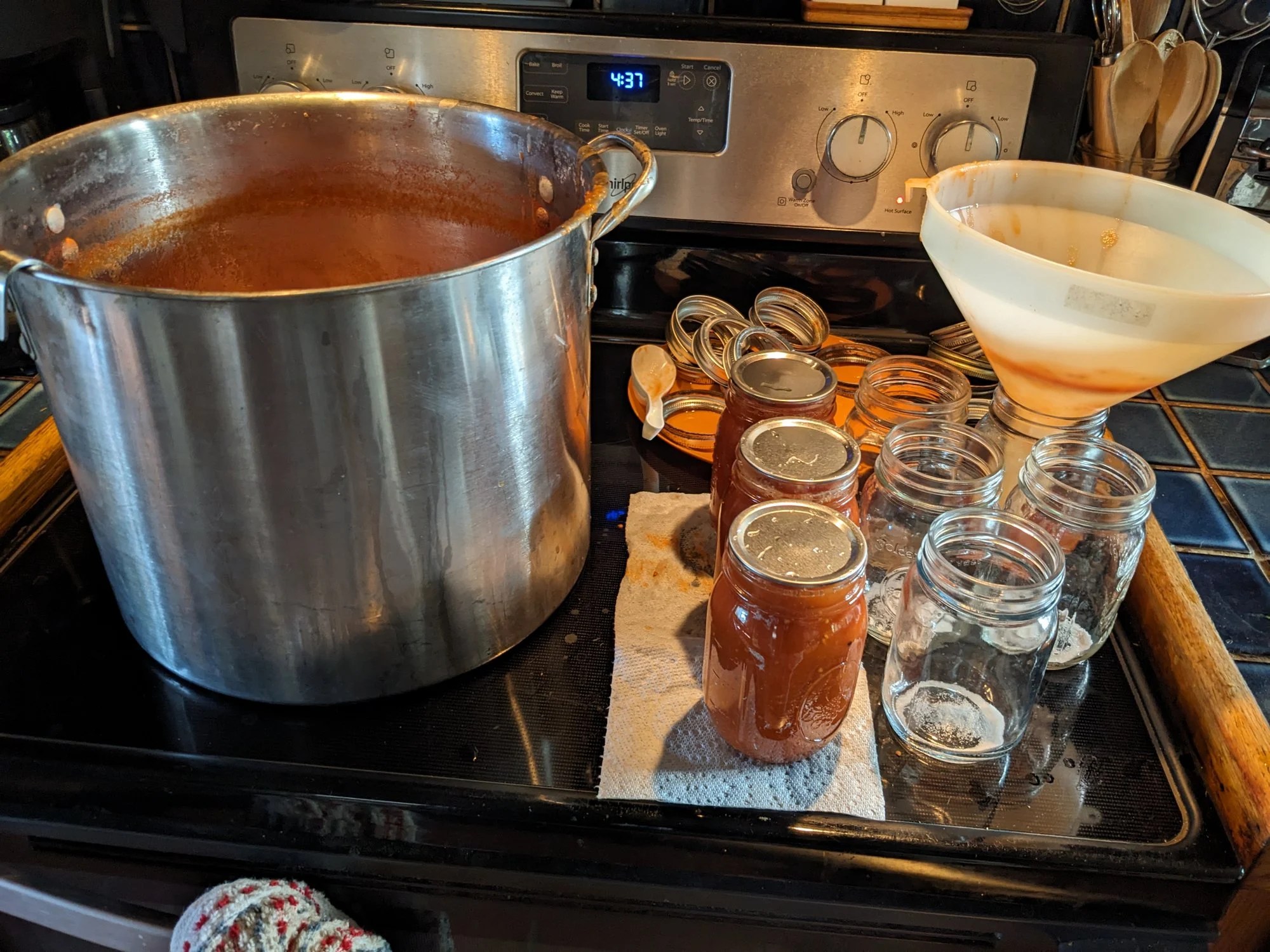
Jarring the tomato sauce
3.Water Bath Processing
Back to the outdoor turkey fryer.
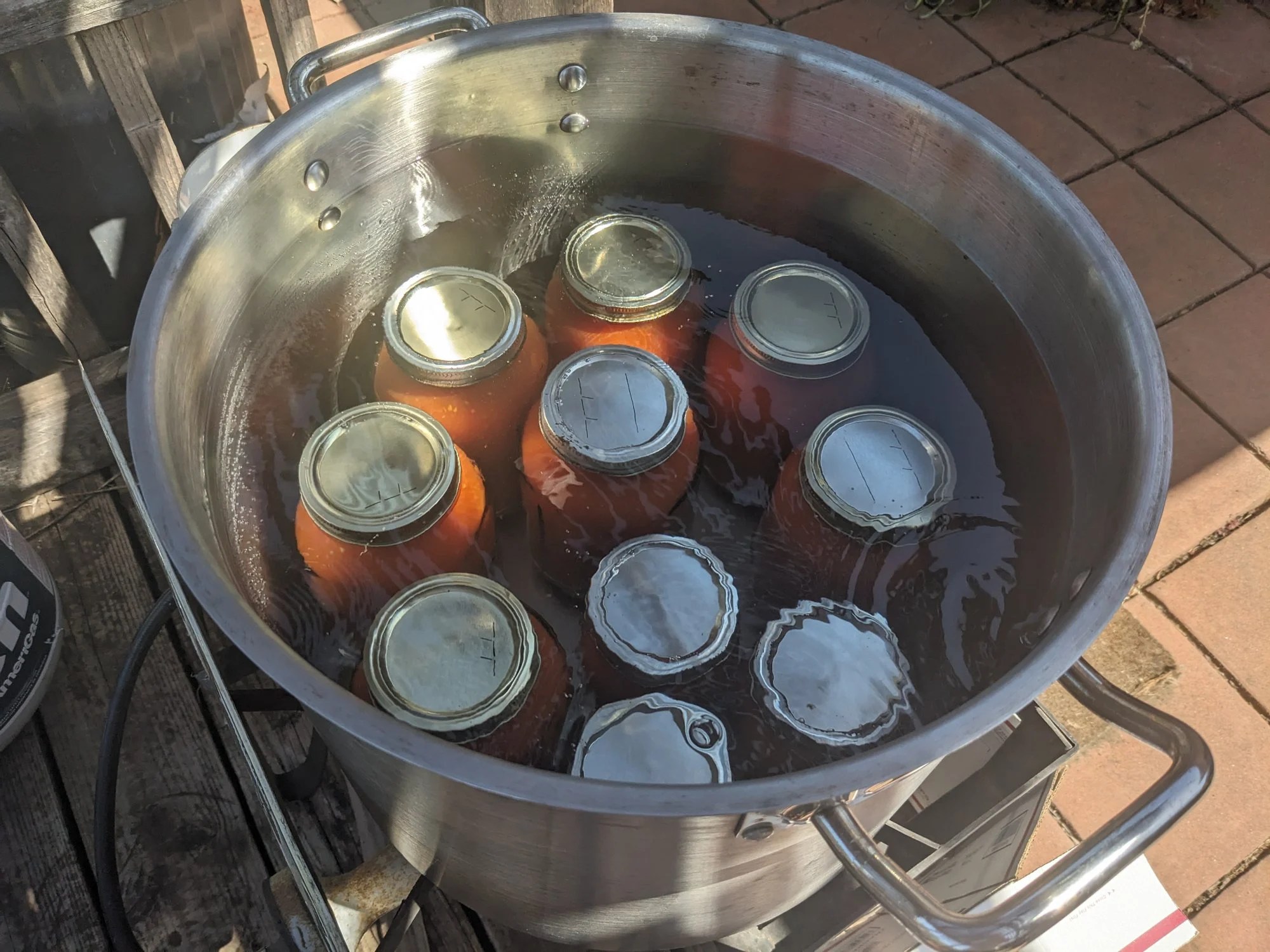
Finishing the jarred tomato sauce in the water bath
Once jarred and wiped clean, the sealed jars go right back into the big 6-gallon pot for a boiling water bath of 10 minutes. Doing the final processing outdoors keeps the heat, mess, and steam completely out of the house.
Demystifying the “August Pause”
If you walk out to your garden right now and notice your tomato vines looking stringy, yellowing at the base, or dropping their blossoms without setting fruit, don’t panic, and don’t pull them up.
What you’re experiencing is a completely natural biological reaction called pollen heat lock.
When daytime temperatures consistently exceed $90° (or nighttime temperatures refuse to dip below 75°), tomato pollen becomes sticky and non-viable. The plant essentially enters survival mode. It realizes it cannot successfully support new offspring during extreme heat, so it stops setting fruit to preserve its energy and water.
Here in San Diego County and across USDA Zone 9+, our growing season is exceptionally long. August isn’t the end of the tomato season; it’s simply intermission.
Shepherding Your Plants into Act Two

The Costaluto tomatoes showing some heat stress and waiting for cooler days
My determinate plants (the Romas and Celebrities) are largely spent for the year, and that’s fine. They did their job. But the indeterminates are simply biding their time until the heatwave passes. Here is how I’m managing them right now so they bounce back for a late fall harvest:
- Adjust Irrigation, Don’t Drown Them: Plants evaporate water rapidly in high heat, but saturated, soggy roots will rot them just as fast. Shift to deep, early-morning watering sessions at ground level rather than frequent light splashes.
- Leave the Foliage Alone: Now is not the time for heavy pruning or clearing out healthy branches. That shade canopy protects the plant’s main stems and any lingering fruit from sunscald.
- Skip The Fertilizers: Don’t try to force a heat-stressed plant into new growth with heavy fertilizers right now. Wait until temperatures moderate in September and then give them them a light, balanced organic feeding (fresh compost is great for this).
As soon as daytime temperatures settle back down into the low-to-mid 80s, those indeterminate plants will begin flowering again. I might not get another 10 gallons of sauce out of them, but we’ll definitely be eating fresh sliced tomatoes, Caprese salads, and BLTs straight into late October.
In short, hang in there through the heat, keep your plants hydrated, and let them rest. Act Two is right around the corner!
You Might Also Like These


About the Author: Sage Osterfeld


