

The 10 Best Vegetables to Plant Now for a Zone 9–10 Fall & Winter Garden

There are plenty of vegetables that thrive in Zone 9-10 fall and winter.
If you garden anywhere in San Diego County, here’s a little secret: October isn’t the end of the gardening year. It’s the start of the good part.
The soil is still warm enough to sprout seeds in a matter of days, but the nights are finally cool enough that lettuce, broccoli and peas stop sulking. Our summer tomatoes are on their second act (more on that in The Great August Pause), and the beds we’ve cleared are ready for round two.
Think of autumn as spring in reverse. All the crops that thrive in March and April thrive just as well from October through February. Some, like kale and carrots, actually taste better this time of year, because chilly nights push the plants to store more sugar.
Below are a dozen of our favorite vegetables for a fall and winter garden, each with a planting window and days to harvest. There’s also a quick-reference planting calendar, some tips for getting your beds ready for a potentially soggy winter, and answers to the questions we get every year.
First, a Quick Word About Zones
When we first wrote this post, we called it a Zone 9 guide. Then the USDA updated its hardiness zone map in late 2023, and much of coastal San Diego moved up to zones 10a and 10b, with some beach neighborhoods landing in 11a. Inland valleys and the foothills still sit in zone 9 (and the mountains go colder still). Personally, I prefer the more accurate Sunset Climate Zones because they take in the many factors (ocean breezes, north-south valleys, etc.) that make for so many micro-climates in our region.
The good news: every vegetable on this list grows well across that whole range. The real difference is timing. Coastal gardens rarely see frost, so they can keep planting deep into winter. Inland gardens get colder nights and the occasional frost, so slower crops like broccoli, cauliflower and cabbage should go in earlier to get established. Not sure which you are? Plug your ZIP code into the USDA Plant Hardiness Zone Map.
And a Word About This Winter’s Weather
This year comes with an extra wrinkle. Federal forecasters at the Climate Prediction Center have put the odds of a very strong El Niño this fall and winter at better than 90 percent, and their seasonal outlook tilts California toward a wetter-than-normal December through February.
That’s not a promise of rain. The last very strong El Niño, in 2015–16, actually left much of Southern California drier than average. But it’s worth planning for a wet one, so we’ve added a section on prepping your beds for heavy rain further down.
Best Vegetables for the Zone 9–10 Fall Garden
1. Peas

Tom Thumb Peas – flavorful and don’t take up much space
Plant: October–February coastal; October–January inland | Harvest: 55–70 days
Snap peas and snow peas are both great for the fall garden. They tolerate frost, and they’ll flower and produce sweet, crisp pods well into winter. Pretty much any variety does well in our climate, but we like compact varieties like ‘Tom Thumb’ and ‘Little Crunch,’ which produce plenty of pods without the big trellis full-size peas need.
Wet-winter tip: pea seeds can rot in cold, waterlogged soil. If a big storm is on the way, wait to sow until after it passes, and plant in a raised bed or a mounded row.
2. Lettuce, Mesclun, Spinach & Other Leafy Greens

Loose leaf lettuce growing in the keyhole garden
Plant: September–February (coastal into March) | Harvest: 30–60 days; arugula and baby greens in as little as 3–4 weeks
Summer is tough on lettuce; it bolts almost as soon as it sprouts. Spinach is even fussier and germinates poorly in warm soil. Once the weather cools, though, they’re fast, easy and thrive in our mild winters.
Start lettuce and mesclun now. Hold spinach and arugula until the soil has cooled a bit, usually mid-October on. We like loose leaf mixes because they grow at different rates and you can keep picking all season. For head lettuce or romaine you pick whole, sow a short row every 2–3 weeks for a steady supply.
Wet-winter tip: slugs and snails love tender greens after a rain. Go out the morning after a storm and pick them off (chickens love them), or use an iron phosphate bait, which is approved for organic gardens.
3. Kale

Lacinto kale is flavorful and will grow for years
Plant: September–January (transplants are fastest) | Harvest: 50–65 days from transplant, picked leaf by leaf for months
Kale is a fall and winter superstar. It’s cold-hardy, it looks great in the garden, and its flavor gets sweeter when nights turn chilly, as the plant converts starches to sugars. Inland gardens that see a light frost get the sweetest kale of all. If you want something pretty on the plate and in the bed, go with lacinato (aka dinosaur kale) or a red variety like ‘Redbor.’
4. Swiss Chard

Bright lights multi-colored kale
Plant: September–March | Harvest: 50–60 days, then cut-and-come-again
Swiss chard is tough, productive and about as low-maintenance as greens get. Trim the outside leaves as you need them and the plant keeps growing new ones from the center. In our mild climate, a single planting can keep producing well into next summer. Varieties like ‘Bright Lights’ have red, yellow, pink and orange stems that brighten up the winter garden.
4. Broccoli

Waltham broccoli does well in our winter climate
Plant: transplants September–January coastal; by mid-November inland | Harvest: about 55–85 days from transplant, depending on variety
Broccoli is the quintessential cool-season crop here. Choose an heirloom, open-pollinated variety like ‘Waltham’ and you’ll get a main head from the center of the plant, then a steady run of smaller side shoots after you cut it.
Some varieties take 80 days or more, so get them in early, especially inland. At this point in the season, nursery transplants are the fastest route. If you start your own from seed indoors, set them out once they have their third set of true leaves. In zones 9b and warmer, you can even grow broccoli as a perennial and keep harvesting for years. Here’s how we’ve kept one patch going since 2020.
5. Cabbage
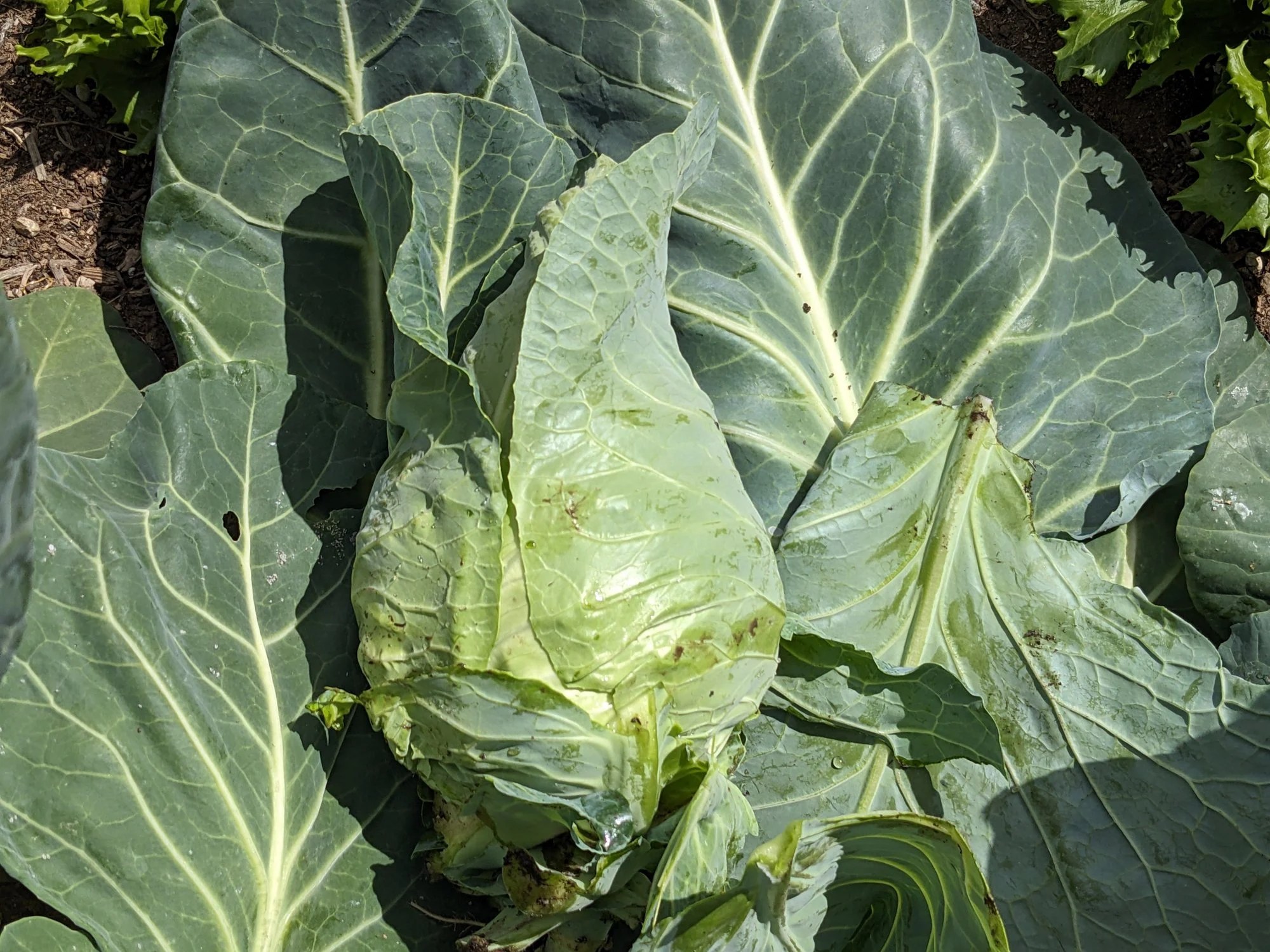
Point cabbage is a great small head cabbage
Plant: transplants October–January | Harvest: about 65–90 days from transplant
Like its cousins broccoli and cauliflower, cabbage loves cool weather and gets sweeter with chilly nights. We prefer pointed (conical) cabbages over the round ball types. They handle the warm start of fall better and are ready to pick sooner than their round siblings.
Watch for cabbage whites. Those white butterflies with black spots (Pieris rapae) love brassicas in the fall. Their eggs hatch into green cabbage worms that chew through the leaves. The easiest fix is a floating row cover that keeps the butterflies from laying eggs in the first place. If worms still show up, Bacillus thuringiensis (Bt) is an organic-approved spray that targets caterpillars only.
6. Carrots

Fresh-picked multi-color carrots
Plant: September–February | Harvest: 60–80 days
Carrots are a perfect fall root crop. They like to be direct seeded, and the still-warm fall soil helps them germinate faster than they will in spring. As the weather cools, the roots store more sugar, so they sweeten as they mature.
The trick with carrots is keeping the seedbed moist for the 1–3 weeks they take to sprout. A strip of burlap or an old board over the row holds in moisture and keeps a heavy rain from washing the tiny seeds away; just lift it as soon as you see green.
Tip: If you have rocky soil or you’re growing in containers, choose a shorter variety like ‘Paris Market,’ ‘Chantenay’ or ‘Danvers Half Long.’ You won’t need to loosen the soil as deeply, and you can plant them closer together.
7. Radishes

Champion radishes grow quickly and have great flavor
Plant: September–March, every 2–3 weeks | Harvest: 25–30 days (60 or so for daikon and other winter radishes)
Radishes are the reward for impatient gardeners: seed to salad in about a month. Sow a short row every few weeks for a steady supply. For something different, try a winter radish like daikon. It takes about twice as long but grows big, mild roots that are great for pickling.
Bonus: tuck radishes between slower crops like kale and broccoli. You’ll harvest them long before the bigger plants need the space.
8. Beets

Early Wonder beets are my go to for easy beets
Plant: September–February | Harvest: 50–70 days
Both the roots and the greens of beets are edible, which makes them one of the most versatile crops in the fall garden. Like carrots, they get sweeter in cool weather. For containers or shallow soil, try a flatter variety like ‘Flat of Egypt,’ which grows much of its root above the soil line.
Tip: Thinning matters more with beets than most crops, and here’s why: each beet “seed” is actually a little cluster of two to four seeds, so they always come up crowded. Thin seedlings to about 3 inches apart (eat the thinnings as baby greens). Crowded beets grow thin, woody and bland.
9. Cauliflower

Snowball cauliflower is compact but still grows good-sized heads
Plant: transplants September–December coastal; by end of October inland | Harvest: about 60–90 days from transplant
Cauliflower is another brassica that loves cool weather. It’s milder than broccoli but more versatile in the kitchen, and it’s one of our favorites for giardiniera because it soaks up the tangy brine and keeps its crunch.
It comes in more colors than white, too. Cheddar (orange-yellow) and Violetta Italia (purple) are two of our favorites. Some varieties take close to 90 days, so plant early, especially if you’re inland.
10. Garlic

California Early softneck garlic can be found at the grocery store
Plant: October–December (October–November is ideal) | Harvest: May–June, about 7–8 months later
Garlic is the long game. You won’t harvest it this fall, but plant it now and you’ll have a big crop of fresh garlic in late spring. It’s ready when the lower third of the leaves have turned brown.
For our mild winters, stick with softneck garlic like the artichoke types (‘California Early’ is a classic) or silverskins. Both store for months after harvest. Hardneck garlic needs a cold winter to form good bulbs and tends to disappoint here.
Money-saving tip: You can plant grocery store garlic, but shop carefully. Look for organic, California-grown bulbs at the farmer’s market or an organic market. A lot of supermarket garlic is imported, and conventional bulbs are often treated to keep them from sprouting on the shelf. Pick big, firm bulbs with tight skins, plant the largest cloves pointy end up about 2 inches deep, and each one becomes a full bulb. If you want to rule out soil-borne diseases, certified seed garlic from a nursery is the safer (if pricier) bet. For more supermarket-to-garden tricks, see The Produce Aisle Pivot.
Honorable Mention: Onions

A red onion harvest from a grocery store onion that went to seed
Zone 9–10 Fall & Winter Planting Calendar
Use this as a quick reference. “Coastal” means frost-rare gardens near the ocean (roughly zones 10b–11a); “inland” means the valleys and foothills (roughly zones 9–10a). Days to harvest are typical ranges; always check your seed packet.
| Crop | Seed or transplant | Plant window — coastal | Plant window — inland | Days to harvest |
|---|---|---|---|---|
| Peas | Seed | Oct–Feb | Oct–Jan | 55–70 |
| Lettuce & greens | Either | Sep–Mar | Sep–Feb | 30–60 |
| Kale | Transplant | Sep–Feb | Sep–Jan | 50–65 from transplant |
| Swiss chard | Either | Sep–Mar | Sep–Feb | 50–60 |
| Broccoli | Transplant | Sep–Jan | Sep–mid Nov | 55–85 from transplant |
| Cabbage | Transplant | Oct–Jan | Oct–Dec | 65–90 from transplant |
| Carrots | Seed | Sep–Feb | Sep–Jan | 60–80 |
| Radishes | Seed | Sep–Mar | Sep–Mar | 25–30 (daikon ~60) |
| Beets | Seed | Sep–Feb | Sep–Jan | 50–70 |
| Cauliflower | Transplant | Sep–Dec | Sep–Oct | 60–90 from transplant |
| Garlic | Cloves | Oct–Dec | Oct–Nov | 7–8 months (harvest May–Jun) |
Getting Your Beds Ready for a Wet Winter
If the El Niño forecast pans out, the biggest threats to a fall garden this year won’t be heat or frost. They’ll be soggy soil, fungus and an army of snails. Here’s how we’re getting ready:
- Plant early. Seedlings with a few weeks of root growth handle a downpour far better than ones that just sprouted. Get your slower crops in before the winter storms set in.
- Raise the beds, or at least the rows. Most cool-season crops hate wet feet, garlic and peas especially. Raised beds and mounded rows drain fast. If water still pools in a low spot after a rain, keep that spot for later.
- Don’t dig wet soil. Working soggy soil squashes out the air pockets roots need. Squeeze a handful: if it holds a sticky ball, wait a day or two.
- Mulch lightly. A thin layer of straw keeps rain from crusting the surface and splashing soil-borne disease onto leaves. Keep it thin, though; a thick, damp layer becomes snail and slug housing.
- Get ahead of snails and slugs. Hand-pick in the morning after a rain, set beer traps, or use an iron phosphate bait approved for organic gardens.
- Give plants room to breathe. Mildew loves crowded, damp leaves. Follow spacing guidelines, and water early in the day so leaves dry before nightfall.
- Turn off the sprinklers. Set your irrigation timer to skip after a rain (or add a rain sensor). Overwatering on top of storms is a fast way to rot roots.
- Top up nutrients. Heavy rain leaches nitrogen out of the soil. Side-dress hungry crops like broccoli and kale with compost, or give them a dose of fish emulsion after a big storm.
- And if the rain doesn’t come? El Niño isn’t a guarantee. Keep an eye on soil moisture and keep watering if winter turns out dry.
One more thing: summer crops like corn, squash, tomatoes and melons pull a lot of nutrients from the soil. Before you replant a summer bed, turn in a generous layer of well-finished compost. It feeds the soil life, and the soil life feeds your vegetables all winter.
Fall Garden FAQ
When is the best time to plant a fall garden in San Diego? September through November is the sweet spot, while the soil is still warm and the days are cooling. Coastal gardens can keep planting most of these crops through winter.
Is it too late to plant vegetables in November or December? Not at all. Lettuce, radishes, peas, beets, carrots, chard, fava beans and garlic can all go in through December, and many can be planted into February near the coast. The slow brassicas (broccoli, cauliflower, cabbage) are the ones to get in early, especially inland.
What growing zone is San Diego? It depends where you are. San Diego County spans zones 8 through 11a. Most coastal neighborhoods are 10a to 11a, inland valleys are mostly 9 to 10a, and the mountains are colder. Check your ZIP code on the USDA map.
Do I need to worry about frost? Near the coast, rarely. Inland valleys can get a few frosty nights from December through February. Most of the crops on this list handle a light frost fine; cover young seedlings with row cover or an old sheet if a hard frost is forecast.
Can I plant garlic from the grocery store? Yes, with caveats. Choose organic, California-grown softneck bulbs, since conventional bulbs may be treated to prevent sprouting and imported garlic may not suit our climate. I get mine either at the local farmers market, or at an organic market like Sprouts, Whole Foods, and Frazier Farms. Certified seed garlic is the safest option if you’ve had disease problems before.
Final Thoughts
So, Zone 9 and 10 gardeners, summer being over doesn’t mean the gardening season is. Get some seeds and transplants in the ground over the next few weeks, keep an eye on the forecast, and you’ll be eating fresh salads and stir fries straight through winter, with fava beans and garlic waiting for you in spring.
What’s going into your fall garden this year? Tell us in the comments, or tag us on Instagram @sagesacre.
About the Author: Sage Osterfeld


